
Dropped Your Phone in Water? Here's What to Do in the Next 60 Seconds.
Liquid damage data recovery specialists since 2002. 5-star rated on Trustpilot. Free UK collection.
What this means and what to do next
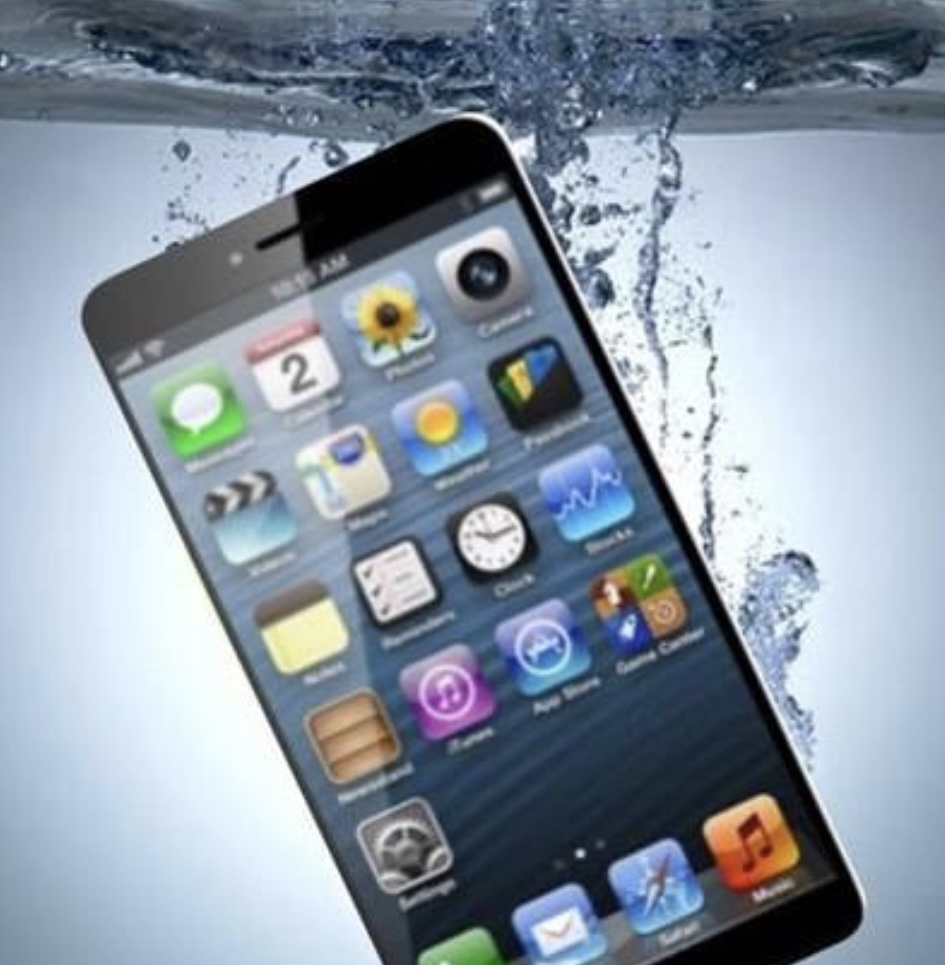
Liquid damage is one of the most time-sensitive data recovery situations there is. Water — and especially salt water, sea water, toilet water, and sugary drinks — begins corroding the copper traces on your phone's logic board within hours of contact. The longer the phone sits unpowered but wet, the worse the corrosion, and the harder recovery becomes. What is a straightforward board-level clean and data extraction job today can become a multi-chip microsolder job by next week.
The good news is that in the majority of liquid damage cases — even phones dropped in toilets, lakes, or washing machines — the data is recoverable. The NAND flash chips that store your photos, messages and contacts are physically robust and sealed; they don't corrode the way the logic board does. Even when the board is too damaged to power on, we can often remove the NAND chip and read it directly using specialised hardware.
Data Clinic has recovered data from iPhones and Android phones dropped in everything from kitchen sinks to swimming pools, hot tubs, and the sea. We are 5-star rated on Trustpilot and have been recovering data from liquid-damaged devices since 2002. The process is board-level — we don't just dry out your phone, we identify exactly which components have failed and recover the data via the most appropriate path.
What actually happens when a phone gets wet
1. Corrosion on the logic board. Water doesn't instantly destroy electronics — it shorts them temporarily and then starts corroding them permanently. When a wet phone is powered on (either by the user or by a charging event), the current flowing through wet circuit traces causes electrolytic corrosion. Copper traces oxidise, components corrode at their solder joints, and pads lift off the board. This is why the most important rule after liquid damage is: don't power it on.
2. Short circuits killing specific components. Even a brief power-on event on a wet phone can destroy specific ICs — the power management chip, the audio codec, or the baseband processor are common casualties. These components are surface-mount chips soldered directly to the logic board. Replacing them requires microsolder work under a stereo microscope, but it's often necessary to get the phone into a state where data extraction is possible.
3. NAND flash chip survival (and why recovery is usually possible). Your photos, messages, WhatsApp backups and contacts are stored in a NAND flash chip — a sealed, encapsulated component that is physically much more resilient than the board it sits on. Even on phones where the logic board is too corroded to power on, we can often remove the NAND chip using a hot-air rework station and read it directly using our chip-off forensic readers. This technique recovers data even from phones that haven't powered on in months.
4. iPhone vs Android differences in liquid recovery. iPhones use a proprietary storage architecture (NAND soldered directly to an Apple SoC with hardware encryption tied to the Secure Enclave) that makes chip-off recovery significantly harder than on most Android phones. For iPhones, the best recovery route is usually to get the board functional enough to boot — via microsolder repair — and then extract via software. Android phones, particularly Samsung and most Chinese-manufactured handsets, more often allow direct NAND chip reading.
How Data Clinic recovers data from a water-damaged phone
When your phone arrives, it goes straight into our lab — no powering on, no attempt to charge it. Our engineer dismantles the handset and inspects the logic board under a stereo microscope to map the corrosion: which components are affected, how far the corrosion has spread, and whether the board is likely to be restorable to a bootable state or whether chip-off extraction is the better path.
For boards with moderate corrosion, we clean the board ultrasonically using an isopropyl alcohol solution to remove oxidation and corrosion deposits, then dry it under a heat lamp before probing for shorts. Components that have been destroyed by corrosion or electrical fault are replaced using hot-air rework and microsolder techniques. For iPhones, our goal is to get the phone into DFU mode — from which data can be extracted via specialist forensic software — without triggering Apple's Activation Lock.
For boards with extensive corrosion, or for Android phones where the architecture supports it, we perform a chip-off extraction: the NAND flash chip is carefully removed from the board using controlled heat, the contacts are cleaned and reballed if necessary, and the chip is read directly in our chip-off reader. The raw NAND image is then reconstructed into a file system using specialist software, and your files are extracted. Once extraction is complete, we verify the files open correctly and return them to you on a fresh drive or via secure download. More on our advanced recovery capabilities →
Get a free initial diagnosis in 60 seconds
In the tool below, choose Phone / tablet → Water or liquid damage for a tailored result.
What our customers say
"Three years of family photos on a drive that suddenly failed. Data Clinic collected next day, kept me updated through the cleanroom work, and got everything back. Worth every penny."
"Honest, fixed-price, no-fix-no-fee. Quoted by another lab at three times the price. Recovered 100% of my files."
"Reasonable cost, clear communication, and they were straight with me about what was recoverable and what wasn't. Recommended."
Frequently asked questions
My phone went in the toilet — can you still recover the data?
Yes, in most cases. Toilet water causes the same type of corrosion as any other water, and recovery is possible as long as the phone hasn't been powered on repeatedly since the incident. The sooner you get the phone to us, the better — corrosion spreads over hours and days, not weeks.
I already put it in rice for two days. Have I ruined it?
Rice doesn't remove moisture from inside a circuit board — it can only absorb moisture from the air around it. The time the phone spent in rice was not harmful in itself, but it was also not helpful. The more important question is whether you powered the phone on while it was wet. If you did, there may be corrosion from the short circuit event, but recovery is still often possible.
Can you recover data if the phone won't turn on at all?
Yes — a phone that doesn't power on is actually safer than one that's been repeatedly powered on. Non-bootable phones are routinely recovered via chip-off NAND extraction or board-level repair. The fact that it won't turn on doesn't mean the data is gone.
Does Data Clinic fix the phone as well as recover the data?
Our primary service is data recovery, not phone repair. In many liquid damage cases we restore the phone to a bootable state as part of the data extraction process — but we make no guarantee of phone functionality after the work. If you need both the data and the phone fixed, we recommend using a specialist phone repair shop after data recovery is complete.
How much does liquid damage data recovery cost?
Liquid damage recovery is priced on assessment because the work involved varies significantly depending on the extent of corrosion and the device model. Most iPhone and Android liquid damage recoveries fall in the range of £200–£600. We give a fixed quote after initial assessment. As phones are not covered by our standard no-data-no-fee guarantee, we will always give you a clear go/no-go assessment before any charges are incurred.
How long does it take?
Standard turnaround is 5–10 working days. Priority and emergency services are available — call 0800 151 2207 to discuss.
Data Clinic Locations
We have many data recovery locations across the UK. You are welcome to drop off but will need to book an appointment first.
Alternatively use our Free Collection service that picks up from ANY UK address.
New London House, EC3V 9LJ
The Mount, Belfast, BT6 8DD
11, St. Paul’s Square, Birmingham, B3 1RB
Castlemead, Bristol, BS1 3AG
Tay House, 300 Bath Street G2 4JR
Building 3, Gelderd Road, Leeds, LS12 6LN
Horton House, Exchange Street East, Liverpool, L2 3PF
The Pavilions, Bridge Hall Lane, Bury, BL9 7NX
Rotterdam House, 116 Quayside, NE1 3DY
Victory House, 400 Pavilion Drive, NN4 7PA
The Balance, 2 Pinfold Street, Sheffield S1 2GU
Basepoint, Andersons Road, Southampton, SO14 5FE