
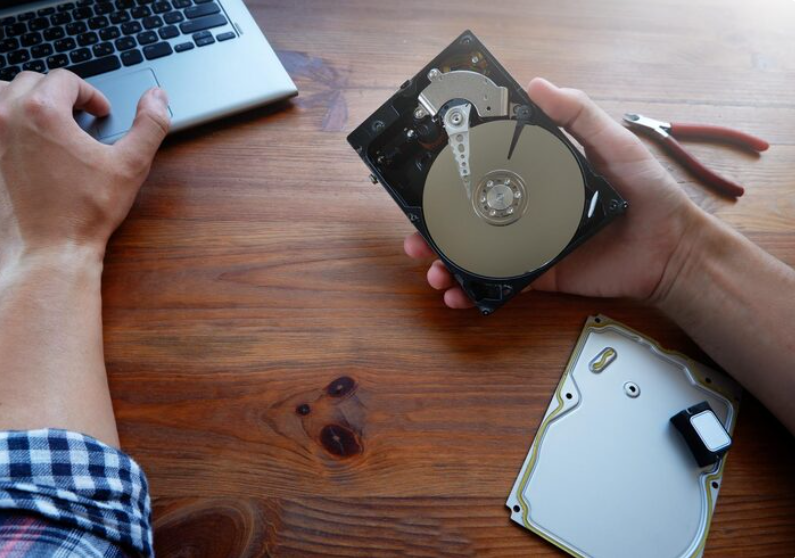
For IT managers and CTOs, a failed RAID array is far more than a hardware fault. It’s a direct operational and financial risk. Gartner estimates that IT downtime now costs mid-sized UK enterprises more than £4,500 per minute, and in environments relying on RAID 5, RAID 6 or RAID 10, even a short outage can halt operations, prevent compliance reporting and delay customer delivery.
Many UK organisations discover too late that parity and mirroring offer resilience, not guaranteed recovery. When arrays degrade or multiple drives fail, the business impact escalates quickly.
Why RAID Arrays Fail in Business Environments
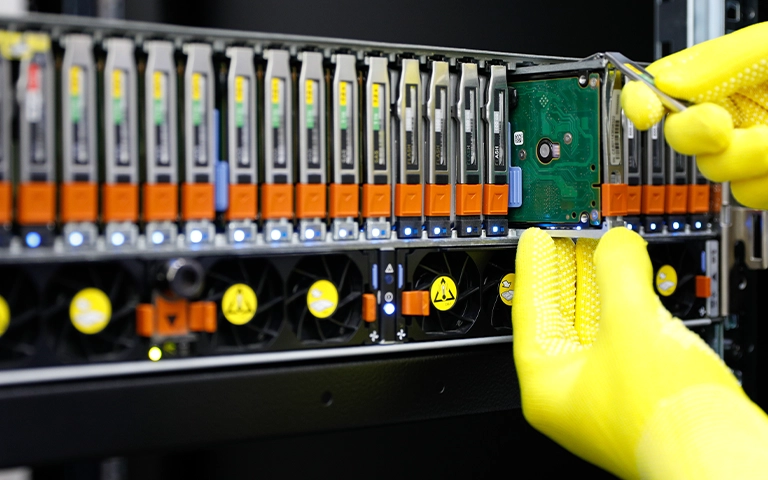
Enterprise RAID failures are still commonly caused by:
- Mechanical head crashes
- RAID controller failure
- Failed or incomplete rebuilds
- Human error during drive replacement
- Firmware issues
- Multiple simultaneous disk failures in older arrays
In the finance, manufacturing and legal sectors – where DataClinic regularly manages emergency RAID recoveries for brands including the BBC and Rolls-Royce – even four hours offline can lead to regulatory penalties or production losses worth six figures.
Specialist RAID Data Recovery for UK Businesses

Our cleanrooms and proprietary RAID imaging systems are designed for enterprise-grade hardware, including:
- Dell PowerVault
- HPE MSA & ProLiant
- Synology & QNAP NAS
- FreeNAS, TrueNAS and BTRFS arrays
- Custom-built Linux and Windows servers
Unlike consumer-level providers, our engineers work exclusively with complex multi-disk failures, degraded arrays and incomplete rebuilds.
For emergency RAID support, call 0800 151 2207 or visit the RAID recovery page.
Frequently Asked Question
Q1. What are the most common causes of RAID failure in UK businesses?
Failures often stem from hardware issues such as controller card failure, multiple disk failures, head crashes, or degraded drives. Software problems, rebuild errors, and human mistakes during drive replacement or reconfiguration are also common.
Q2. Can data still be recovered if multiple drives in the array have failed?
In many cases, yes. Even when a RAID has suffered multiple drive failures, experienced recovery specialists can often reconstruct the array by imaging all drives and rebuilding the RAID virtually – depending on the extent of damage and RAID type.
Q3. What should I do immediately after my RAID or server fails?
Power down the system and stop all further operations. Do not attempt DIY fixes or rebuilds. Then contact a professional RAID recovery service to avoid further damage or data overwrite.
Q4. How long does a typical RAID data recovery take?
It depends on the complexity of the failure – simple logical failures might be resolved within 24-48 hours once parts and drives are received. For hardware-level failures or multiple-drive issues, recovery can take several days up to a week.
Q5. What happens if RAID recovery fails – do I still get charged?
Most reputable labs offer a “No Data – No Fee” policy. This means if we can’t recover sufficient data (e.g. major corruption, too few functional drives), you won’t be charged for the recovery attempt (except possibly for parts or media costs).
Data Clinic Ltd – Our Latest Trustpilot Reviews
 106 Reviews
 04 Feb 2026

Great communication , great customer service.
Clear and prompt advice and communication from Mark from the outset about my problem. The fee was very reasonable and everything was explained well. I got to see a ...
 03 Feb 2026
Hard drive repair
I sent my hard drive from the Republic of Ireland to Bury, Uk. I was so impressed with the level of communication I received throughout the process of retrieving ...
22 Dec 2025
Fantastic service from Dataclinic.
Fantastic service from Dataclinic. Highly organized from start to finish, including clear upfront cost estimate, smooth pickup, regular updates on diagnosis & data recovery, and speedy return. Definitely recommend. ...
 19 Dec 2025
Every time I would panic and spiral
Every time I would panic and spiral, I called their phone number and was always greeted with reassurance and help! Love this company!!!

 18 Dec 2025
Data Clinic was professional, fast, efficient and resourceful
Data Clinic was really professional, respectful, and fast! I highly recommend their service, it's really convenient as they pick up and deliver the item and they're really quick at ...
05 Dec 2025
Data Clinic - Highly recommended
I'm so impressed with Data Clinic. From my first phone call, they were professional, efficient, and incredibly reassuring at a time when I felt quite stressed about my lost ...
 15 Oct 2025
They recovered my pictures, did exactly what they said they would at the lowest cost
My Samsung S22 was water damaged whilst on holiday. I tried drying it out, didn't work, I went online to look at data recovery, looked at lots of places, ...
28 Aug 2025
So thankful for Data Clinic
So thankful for Data Clinic. I was told by multiple phone repairs that they either couldn't do it, or it would be extremely difficult to get my data back. ...
20 Aug 2025
I am very very happy with my experience…
I am very very happy with my experience with Data Clinic. My phone when pop with a blank screen and therefore could not open it.( It was not the ...